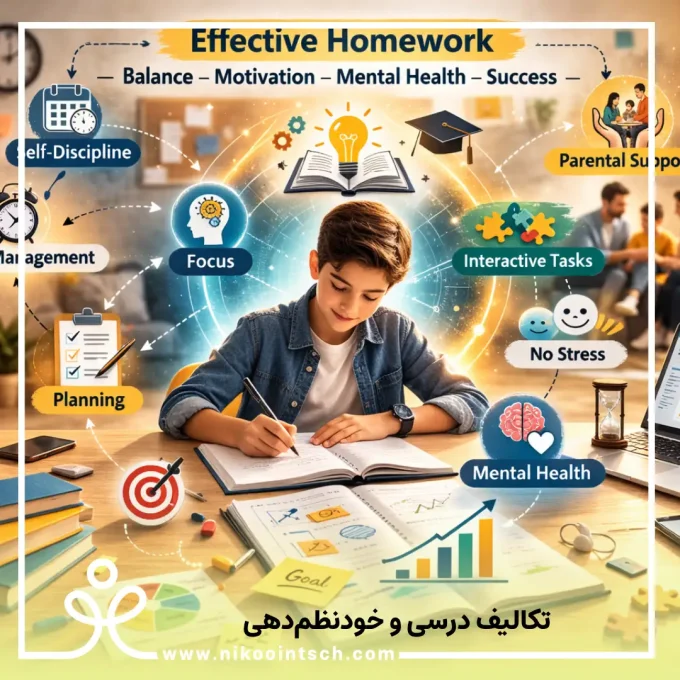

A Well-Structured Study Plan: A Shield Against Exam Anxiety
Exam anxiety is one of the most common psychological challenges for children and adolescents. If not properly managed, it can affect self-confidence, academic performance, and even a child’s attitude toward learning. Many parents and educators tend to focus more on exam results than on the preparation process. However, educational experience shows that a well-structured study plan acts as a shield against exam anxiety; a shield that not only reduces psychological pressure but also strengthens the child’s sense of competence and control.
Have you ever wondered why some children enter exams calmly while others, despite studying a lot, experience severe anxiety? The answer lies in how they study, not just in how much they study. Additionally, anxious parental behavior, especially from those who had stressful school experiences, plays a significant role in increasing anxiety.
Why Does Exam Anxiety Develop in Children?
Exam anxiety usually results from a combination of factors: fear of failure, high expectations from family or school, past negative experiences, and lack of proper study skills. A child who doesn’t know where to start, what to study, or how to track progress feels confused and powerless. This sense of uncertainty forms the main foundation of anxiety. From an educational perspective, anxiety is not a sign of weakness; rather, it signals the child’s need for guidance, structure, and conscious support from adults.
What is a Well-Structured Study Plan and What Are Its Features?
A well-structured study plan is not a rigid, high-pressure schedule. It is a plan that aligns with the child’s age, abilities, learning pace, and mental state. Such a plan includes the following features:
۱. Realistic and Flexible
A plan that exceeds the child’s capacity can itself become a source of anxiety. A proper plan considers short study sessions, regular breaks, and flexibility.
۲. Goal-Oriented but Process-Focused
In a nurturing approach, the goal is not just a “good grade” but deep learning, a sense of progress, and skill development. The study plan should focus on effort, not merely on outcomes.
۳. Adapted to the Child’s Learning Style
Some children are visual learners, some auditory, and some kinesthetic. A plan that ignores these differences will not be as effective.
The Role of a Study Plan in Reducing Exam Anxiety
When a child knows when, what, and how to study, they feel more in control. This sense of control is the key factor in reducing anxiety. In fact, a well-structured study plan acts as a shield against exam anxiety because:
- It reduces uncertainty.
- It boosts the child’s self-confidence.
- It prevents last-minute cramming before exams.
- It provides small, gradual successes.
A child who progresses a little every day is less likely to fear the final exam.
The Role of Parents in Designing and Implementing the Study Plan
Parents act as guides, not controllers. Important principles include:
Collaboration Instead of Imposition
The study plan works best when created with the child’s participation, fostering responsibility and ownership.
Attention to Emotions
If the child is tired, anxious, or unmotivated, forcing study can backfire. Sometimes a supportive conversation is more effective than hours of studying.
Being a Calm Role Model
Parents who constantly worry about exam results unintentionally transfer anxiety to the child. Calm parents communicate a sense of security.
The Role of Schools in Strengthening This Protective Shield
Teachers and educators can play a major role in reducing exam anxiety by teaching study skills, time management, and reducing unhealthy competition. Emphasizing descriptive assessment, constructive feedback, and encouraging effort aligns with a nurturing approach and teaches children that exams are not the end of the learning journey.
Exam anxiety is natural but manageable, especially when parents and teachers focus on teaching skills rather than pressuring results. Experience shows that a well-structured study plan acts as a shield against exam anxiety, providing order, a sense of control, and confidence, preparing children to face assessments healthily. If our goal is to raise calm, responsible, and lifelong learners, we must shift our focus from exam results to the learning process—the most valuable gift we can give our children.